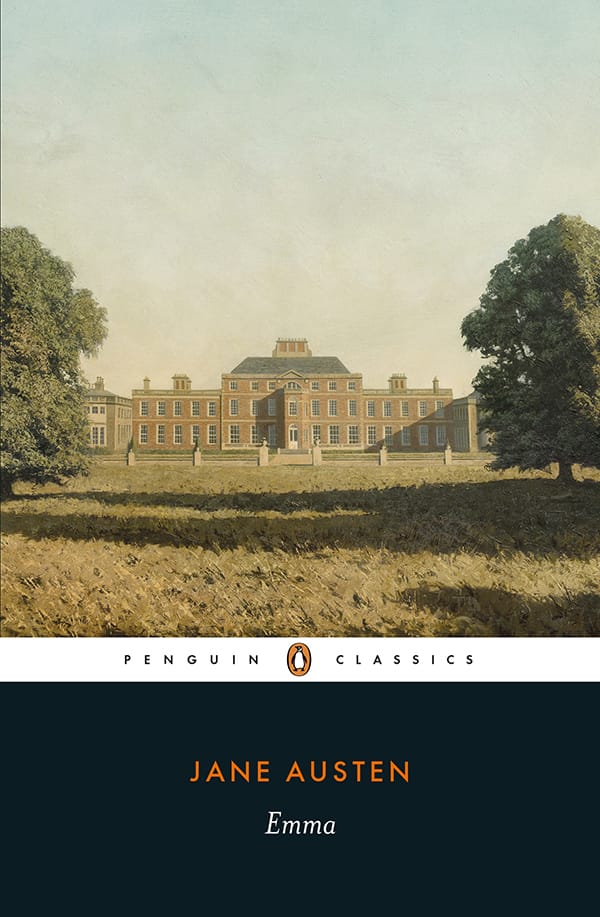
Emma was written between January 1814 and March 1815, published in 1815. The title character, Emma Woodhouse, is queen of her little community. She is lovely and wealthy. Se has no mother; her fussy, fragile father imposes no curbs on either her behavior or her self-satisfaction. Everyone else in the village is deferentially lower in social standing. Only Mr. Knightley, an old family friend, ever suggests she needs improvement.
Emma has a taste for matchmaking. When she meets pretty Harriet Smith, “the natural daughter of somebody,” Emma takes her up as both a friend and a cause. Under Emma’s direction, Harriet refuses a proposal from a local farmer, Robert Martin, so that Emma can engineer one from Mr. Elton, the vicar. Unluckily, Mr. Elton misunderstands the intrigues and believes Emma is interested in him for herself. He cannot be lowered to consider Harriet Smith.
Things are further shaken by the return to the village by Jane Fairfax, niece to the garrulous Miss Bates; and by a visit from Frank Churchill, stepson of Emma’s ex-governess. He and Jane are secretly engaged, but as no one knows this, it has no impact on the matchmaking frenzy.
The couples are eventually sorted out, if not according to Emma’s plan, at least to her satisfaction. Uninterested in marriage at the book’s beginning, she happily engages herself to Mr. Knightly before its end.